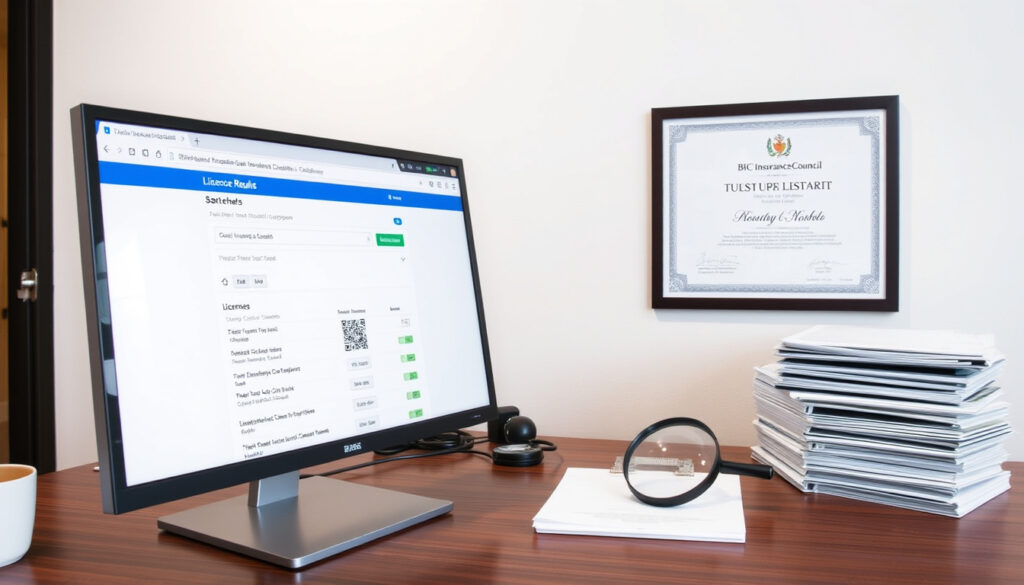
Insurance Council of BC: Licensing & Licensee Search
If you’re aiming to sell insurance or work as an adjuster in British Columbia, the Insurance Council of BC is the regulatory gatekeeper you’ll need to satisfy—this provincial body sets the licensing standards, oversees professional conduct, and maintains a public registry of every licensed agent. Understanding how it works can shave weeks off your application and help you avoid common pitfalls.
Regulatory body: Insurance Council of BC ·
Province: British Columbia ·
Licensed professions: Life, accident and sickness, and general insurance agents, salespersons, adjusters
Quick snapshot
- The Insurance Council of BC licenses all insurance agents, salespersons, and adjusters in the province (Insurance Council of BC – official licensing page).
- A criminal record check is mandatory for initial licensing (Insurance Council of BC – Getting a Licence). (Insurance Council of BC – official licensing page)
- Continuing education (CE) credits are required to renew a licence each year (Insurance Council of BC – licensing requirements). (Insurance Council of BC – official licensing page)
- Exact processing times for license applications can vary; the council states a typical range of 10–15 business days for complete submissions (Insurance Council of BC – application timeline).
- Specific licensing fees are not listed on the public website and may depend on licence type and whether the application is paper or online.
- Applications are typically reviewed within 10 business days after receipt of a complete application (Insurance Council of BC – processing timeline).
- Submissions on weekends or statutory holidays are considered received the next business day (Insurance Council of BC – policy on submission timing).
- After licensing, agents must complete annual continuing education credits to maintain their licence. (Gowling WLG – analysis of 2024 licensing reforms)
- Licence holders can upgrade to Level 3 designations through education and experience, without requiring a management role (Gowling WLG – analysis of 2024 licensing reforms).
The table below outlines the Council’s mission and key operational details.
| Category | Details |
|---|---|
| Mission | Safeguarding consumers by promoting ethical, competent, and accountable insurance practice. |
| Licensed professions | Life, accident and sickness, and general insurance agents, salespersons, adjusters. |
| Official website | www.insurancecouncilofbc.com |
| Social media | Active on Facebook (@InsuranceCouncilofBC) and Instagram (@insurancecouncilofbc) |
| Minimum age for applicants | 16 years (Insurance Council of BC – eligibility) |
| Review timeframe (complete applications) | 10–15 business days (Insurance Council of BC – processing) |
What is the Insurance Council of BC?
Role of the Insurance Council of BC
The sale or adjusting of insurance is a regulated occupation in British Columbia, and the Insurance Council of BC is the authority that enforces those standards. It operates under the Financial Institutions Act and sets the qualification and practice requirements for everyone who works in insurance — from general agents to adjusters (Insurance Council of BC – regulatory framework).
- Licenses individuals and organizations in life, accident and sickness, and general insurance.
- Promotes ethical, competent, and accountable practice across the industry.
- Maintains a public registry of all licensed agents and their disciplinary history.
The Insurance Council is not ICBC — the latter is a crown corporation that provides basic auto insurance. The Council oversees agent conduct; ICBC handles claims and premiums. Mixing them up is a common rookie mistake.
History and governance
The Insurance Council was established under the Financial Institutions Act and has evolved its licensing rules over the years. On February 6, 2024, it announced significant changes as part of a multi-year initiative to modernize requirements (Gowling WLG analysis of 2024 licensing reforms). Effective April 1, 2024, adjusters and general insurance agents no longer need a management or ownership role to qualify for Level 3 licences — the path is now based purely on education and experience.
What this means: agents who were stuck at Level 2 because they didn’t manage a team can now upgrade purely by demonstrating advanced knowledge and years in the field. It’s a straightforward progression that rewards expertise over hierarchy.
How to perform a licensee search with the Insurance Council of BC?
Step-by-step licensee search
The Insurance Council offers an online tool to verify any agent’s license status. It’s free, public, and takes about 30 seconds.
- Go to the official website: www.insurancecouncilofbc.com.
- Click on “Licensee Search” in the top navigation menu.
- Enter the person’s full name, license number, or company name.
- Review the results: license status (active, suspended, or expired), licence type, and any disciplinary notes.
What information is available in a licensee record?
Each record shows the licensee’s full legal name, licence class (e.g., Level 1, 2, 3), issue and expiry dates, and a history of disciplinary actions if any. Searches are free and open to the public (Insurance Council of BC – licensee search description).
| Field | What it shows |
|---|---|
| Name | Full legal name of the agent or salesperson |
| License number | Unique identifier assigned by the Council |
| License status | Active, suspended, revoked, or expired |
| Disciplinary history | List of formal actions taken against the licensee |
The implication: consumers can easily check whether their insurance agent is in good standing before signing any policy. It’s a transparency tool that protects both clients and honest professionals.
What are the licensing requirements and processes?
Criminal record check requirements
A criminal record check is part of every initial licence application. The Insurance Council of BC requires applicants to submit a completed criminal record check form as part of the licensing process (Insurance Council of BC – Getting a Licence).
- The check must be processed through the Criminal Records Review Program.
- It is mandatory for all insurance agent licence types.
- Note: The cost of the check is not published on the official site; applicants should budget around $30–$50 based on typical provincial fees.
If you have a criminal record for a relevant offence, the Council may refuse your application or impose conditions. Always be transparent — omitting a record is grounds for licence denial.
Continuing education (CE) credits
Every licensed agent in BC must complete continuing education hours each year to keep their licence active. The Council sets specific requirements for different licence classes (Insurance Council of BC – CE requirements).
- General insurance agents: 12 CE credits per year (minimum 6 in technical topics).
- Life and accident/sickness agents: 12 CE credits per year.
- Adjusters: 12 CE credits per year.
- Courses are offered by approved providers; many are online.
Application processing times
The Insurance Council states it makes its best effort to review applications within 10 business days after a complete submission (Insurance Council of BC – processing timeline). In practice, the range is 10–15 business days. Applications submitted on weekends or statutory holidays are considered received the next business day. If the agency or firm has not yet verified the application, it will be considered incomplete and will not be reviewed until verification arrives.
The implication: applicants should plan for at least a two-week review period and ensure their agency verifies the application to avoid delays.
“The Insurance Council of BC safeguards consumers by promoting ethical, competent, and accountable insurance practice.”
Insurance Council of BC – official website
“Effective April 1, 2024, adjusters and general insurance agents will not require a management or ownership role to qualify for a Level 3 adjuster or Level 3 general insurance agent licence.”
Gowling WLG – analysis of 2024 licensing reforms
Related reading: Lost Health Insurance Card? Replace Your Carte Vitale or RAMQ
insurancecouncilofbc.com, insurancecouncilofbc.com, insurancecouncilofbc.com, ibabc.org, insurancecouncilofbc.com, insurancecouncilofbc.com
Frequently asked questions
How do I become a licensed insurance agent in BC?
Complete a pre-licensing education course, pass the required exam, submit a licence application with a criminal record check, and pay the applicable fee. The Insurance Council of BC reviews complete applications within 10–15 business days.
What is the difference between the Insurance Council of BC and ICBC?
The Insurance Council of BC is the regulator for insurance professionals. ICBC (Insurance Corporation of British Columbia) is a crown corporation that provides basic auto insurance and handles claims. They are separate entities with different roles.
How often do I need to complete CE credits?
All active licence holders must complete 12 CE credits each year. The credits must include a minimum of 6 technical credits for general insurance agents. Courses must be from an approved provider.
What happens if I do not renew my licence?
Your licence will expire, and you cannot legally sell or adjust insurance in BC. You may be able to reinstate within a grace period, but after that you must reapply as a new applicant.
Can I search for an insurance agent’s disciplinary history?
Yes, the Insurance Council of BC provides a free online licensee search tool. Results show any disciplinary actions, suspensions, or revocations.
What is the cost of a criminal record check for licensing?
The official website does not list a specific fee. Applicants should expect a cost typical of provincial criminal record checks (usually between $30 and $50).
How do I report a complaint about an insurance agent?
Contact the Insurance Council of BC directly through its website to file a formal complaint. Provide details about the issue, the agent’s name and license number if known.
For anyone working in BC’s growing insurance market — whether you’re a fresh applicant or a seasoned agent verifying credentials — the Insurance Council of BC is the single source of truth. The decision is straightforward: use the licensee search tool to double-check anyone you hire or work with, and keep your own CE credits current, or risk losing your ability to practice in a province where insurance is a regulated profession.
More related posts
 Draw a Perfect Circle: Tips, Hacks & World Record Scores
 Quartier Latin Cinema Schedule: Showtimes & Movies Now
 5 Year Canada Bond Yield – Current Rate, History & Forecast
 Maxim Truck and Trailer – Canada Locations Services Careers
 Phone Number Lookup Canada: Free Reverse Lookup & People Search
 Michel Bergeron: Quebec Nordiques Coach Biography
 7 Eleven Free Slurpees – 2025 Date Time How To Claim
 Elon Musk Net Worth 2026: $839B Real-Time Updates
