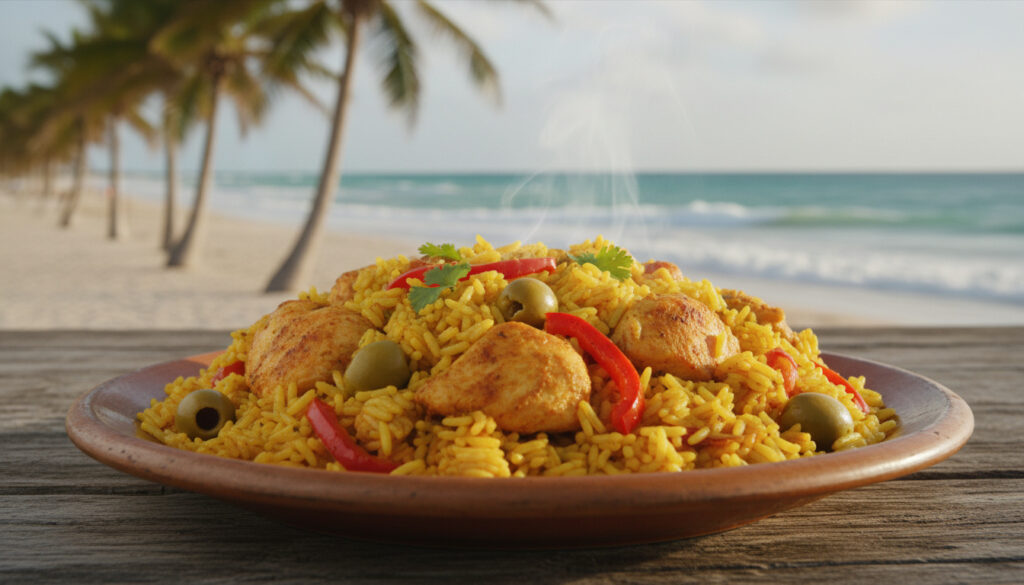
Best Arroz con Pollo Cubano Near Me – Authentic Miami Spots and Recipe
Arroz con pollo cubano anchors Cuban culinary tradition as a one-pot dish of chicken and yellow rice simmered in sofrito, tomatoes, and spices. Unlike Spanish paella, this Cuban staple excludes seafood, focusing instead on accessible ingredients transformed through slow cooking and generational knowledge.
Miami’s Cuban exile community preserved and evolved the dish throughout the 1970s and 1980s, establishing family-run restaurants that distinguish authentic preparation through specific techniques. Today, finding quality arroz con pollo requires identifying establishments that maintain these traditions rather than offering generic Latin chicken and rice.
Finding quality arroz con pollo requires identifying establishments that maintain these traditions. The following sections cover where to locate verified authentic spots, what distinguishes Cuban preparation from Puerto Rican variations, and how to evaluate quality whether dining in Miami or arranging delivery.
Where to Find the Best Arroz con Pollo Cubano Near Me
Key Cities
Miami dominates with third-generation establishments; NYC and LA offer limited alternatives via DoorDash delivery networks.
Signature Ingredients
Chicken, yellow rice, sofrito (onions, peppers, garlic), tomatoes, and bijao beer or annatto for coloring.
Average Price Range
$12 to $20 per entree depending on location and side dish inclusions.
Best Time to Order
Dinner service and weekends when traditional kitchens operate at full capacity.
- Miami’s Little Havana and Westchester neighborhoods host the highest concentration of family-run Cuban restaurants serving traditional arroz con pollo.
- El Palacio de los Jugos, operating since 1977, maintains recipes emphasizing fresh juices and roasted chicken preparations passed through generations.
- La Carreta ranks #69 among Miami restaurants on TripAdvisor with 644 reviews, serving arroz con pollo at multiple locations including MIA Airport Gate D36.
- DoorDash connects customers to El Rinconcito Latino, Havana 1957, and Three Palms Cuban Café for home delivery of family-style portions.
- Third-generation establishments like Islas Canarias and Sergio’s (operating since 1975 with over 20 million croquetas served) indicate deep culinary heritage.
- Menus specifying “arroz moro con pollo” or “pollo asado con arroz” signal authentic preparation methods.
- Yelp and TripAdvisor ratings above 4.5 stars typically correlate with proper sofrito integration and rice texture.
| Fact | Details |
|---|---|
| Origin | Cuba, adapted from Spanish colonial influences |
| Primary Protein | Roasted, grilled, or shredded chicken (vaca frita style) |
| Rice Variation | White rice or moro (cooked with black beans) |
| Essential Base | Sofrito (onions, peppers, garlic) |
| Coloring Agent | Annatto or bijao beer |
| Caloric Content | Approximately 600 calories per serving |
| Home Preparation Time | 45 minutes to 1 hour |
| Miami Price Range | $12 to $20 per plate |
| Top Established Spot | El Palacio de los Jugos (since 1977) |
| Airport Availability | La Carreta at MIA Gate D36 |
| Delivery Platforms | DoorDash for Miami family restaurants |
| Generational Depth | Third-generation operations trace to 1970s exile wave |
What Is Arroz con Pollo Cubano?
The dish consists of chicken and rice cooked together in a single pot, allowing the grains to absorb flavors from poultry drippings, sofrito, and cooking liquid. Historical records trace the preparation to Spanish colonists who adapted rice-and-poultry combinations to Cuban ingredient availability, substituting expensive saffron with annatto seeds.
How It Differs From Puerto Rican Versions
Cuban arroz con pollo emphasizes a milder, sofrito-focused flavor profile with gravy-heavy consistency. Puerto Rican preparations typically incorporate bolder adobo seasoning, olives, and frequently chickpeas or gandules (pigeon peas). Texture distinctions emerge through cooking technique: Cuban versions tend toward softer rice with thoroughly roasted chicken, while Puerto Rican styles sometimes develop crispy socarrat at the rice bottom.
The Role of Sofrito and Annatto
Authentic preparation relies on sofrito—a blended aromatic base of onions, green peppers, and garlic—cooked until sweet before adding chicken. Annatto or bijao beer provides the distinctive yellow coloration, distinguishing the dish from turmeric-tinted imitations. The liquid reduction creates a cohesive plate where rice maintains separate grain structure rather than dissolving into porridge.
True Cuban arroz con pollo arrives with a deep yellow-orange hue derived from annatto, not turmeric. The dish should display visible sofrito integration and accompany tostones or maduros rather than generic steamed vegetables. Restaurants describing “Cuban gravy” alongside rice and chicken typically follow traditional Miami preparation standards.
While Miami restaurants standardize the sofrito-heavy approach, inland Cuban variations historically incorporated more root vegetables. Coastal preparations sometimes included shellfish stock, though modern Miami establishments rarely follow this practice.
Authentic Arroz con Pollo Cubano Recipe
Culinary specialists emphasize that home preparation requires specific sequencing to achieve proper texture. The chicken must brown sufficiently to create fond before sofrito addition, and rice requires undisturbed steaming after initial boiling.
Essential Ingredients
Traditional recipes require chicken pieces (typically leg and thigh), short-grain rice, bijao beer or annatto oil, and sofrito base. Cumin, oregano, and tomatoes form the liquid foundation, while peas, roasted red peppers, and pimentos garnish the finished dish. Recipe databases note that beer selection affects final flavor profoundly.
Execution Method
Browning chicken in a heavy pot creates the flavor base. Sofrito cooks down until aromatic before adding spices, followed by beer and stock. Rice enters only after liquids reach simmer, cooking uncovered until absorption completes, then covered to steam. The result yields distinct grains coated in rich color, accompanied by tender chicken falling from bone.
Stirring rice during cooking releases starch and creates mush. Adding cold liquid to hot rice shocks the grains into uneven cooking. Skipping the annatto steeping results in pale, unidentifiable yellow rice lacking the dish’s signature appearance.
Top Arroz con Pollo Cubano Spots in Major Cities
Miami’s Family-Run Institutions
El Palacio de los Jugos operates multiple Miami locations, offering arroz moro con pollo asado y tostones alongside fresh-pressed tropical juices. Their preparation emphasizes family traditions dating to 1977. La Carreta serves arroz con pollo praised for fresh preparation across locations including MIA Airport Gate D36, maintaining consistent quality for travelers.
Sergio’s applies recipes developed in 1975, while Islas Canarias operates as a third-generation establishment. La Mesa in Doral provides contemporary Cuban-Latin interpretations. Havana 1957 serves Pollo Havana 1957—a roast chicken variant with Cuban gravy, rice, black beans, and plantains derived from family recipes yielding generous portions.
Beyond Miami
Miami dominates authentic arroz con pollo availability due to cultural proximity and established exile communities. New York City and Los Angeles lack equivalent density of specialized Cuban family restaurants in available data. Residents outside Miami should search Yelp specifically for “Cuban arroz con pollo” rather than generic “chicken and rice” to filter results.
DoorDash delivery extends reach to spots like El Rinconcito Latino, Three Palms Cuban Café, and Vicky Bakery, though texture degradation occurs during transport. For optimal results, order pollo asado with rice sides to mimic arroz con pollo when dedicated delivery options prove limited.
How Arroz con Pollo Became a Miami Staple
- Pre-1960s Cuba: Spanish colonists introduce rice-poultry combinations; Cuban families adapt using local annatto and beer instead of imported saffron, creating distinct island variations.
- 1970s Exile: Restaurants like El Palacio de los Jugos establish in 1977, transporting Havana-style recipes to Miami’s emerging Cuban enclaves and standardizing the sofrito-heavy approach.
- 1990s Expansion: Third-generation establishments including Islas Canarias formalize family recipes into scalable operations, confirming Miami as the North American center for authentic preparation.
- 2000s Institutionalization: La Carreta opens at MIA Gate D36, making traditional arroz con pollo accessible to travelers and validating the dish’s commercial viability through sustained TripAdvisor rankings.
- 2010s-Present: Delivery platforms expand access beyond restaurant walls, though connoisseurs note that dining room service at establishments like Sergio’s preserves intended texture and temperature.
Authentic vs Americanized Versions
| Established Cuban Characteristics | Information Remaining Unclear |
|---|---|
| Sofrito base (onions, peppers, garlic) required | Specific beer brands used (bijao vs. standard lager) |
| Annatto or achiote provides yellow coloring | Whether turmeric substitutes alter flavor profiles significantly |
| Roasted or grilled chicken with skin intact | Consistency of shredded chicken applications (vaca frita style) |
| Accompanied by tostones and black beans | Gravy thickness standards across different establishments |
| Third-generation family restaurant origins | Whether NYC/LA locations achieve equivalent authenticity |
| Beer or stock liquid base | Specific regional variations within Cuba itself |
Why Arroz con Pollo Cubano Stands Out
The dish functions as edible history, connecting Cuban-Americans to pre-revolutionary island traditions through specific sensory markers. Unlike Puerto Rican or Spanish iterations, the Cuban version prioritizes sofrito depth over spice heat, creating a comfort food profile that explains its persistence in Miami’s culinary landscape for nearly five decades.
Family restaurants treat recipes as intellectual property, with some establishments calculating millions of servings across decades. The combination of perfectly roasted chicken techniques with specific rice preparation creates a textural contrast difficult to replicate without generational knowledge of timing and temperature.
Rising popularity outside Cuban communities reflects broader American interest in authentic one-pot meals, though availability remains concentrated where diaspora communities established sufficient population density to support specialized kitchens.
Expert Tips and Sources
The distinction lies in the sofrito. Without the proper blend of onions, peppers, and garlic cooked down until sweet and aromatic, the dish becomes merely yellow rice with chicken.
Culinary traditions maintained at El Palacio de los Jugos and third-generation Miami establishments
Family recipes distinguish Cuban arroz con pollo through gravy consistency and the specific application of annatto for coloration.
Practices documented at Islas Canarias and Sergio’s since 1975
How to Order or Make Your Own
Begin with Google Maps or Yelp filters set specifically to “Cuban” rather than broad “Latin” categories, looking for menu mentions of “arroz moro” or “pollo asado” with Cuban gravy. For home preparation, source bijao beer or annatto seeds from Latin markets, and remember that planning your ingredient sourcing matters as much as technique. Whether dining at La Carreta before a flight or recreating the dish in your kitchen, prioritize the sofrito foundation above all else.
Frequently Asked Questions
Is arroz con pollo cubano the same as paella?
No. Cuban arroz con pollo excludes seafood, uses annatto instead of saffron for coloring, and relies on a sofrito base distinct from Spanish seasoning methods.
Can I make arroz con pollo cubano without beer?
Yes, though beer provides traditional flavor depth. Substitute chicken stock with a splash of vinegar for acidity, though the dish loses some authentic character.
What sides traditionally accompany arroz con pollo cubano?
Tostones (fried plantains), maduros (sweet plantains), black beans, and simple salads appear consistently across Miami establishments like El Palacio de los Jugos.
How do Cuban and Puerto Rican versions differ?
Cuban styles emphasize sofrito and milder gravy, while Puerto Rican versions incorporate adobo, olives, and often chickpeas or gandules for bolder, more
More related posts
 Roxane Bruneau: Viral Rise, Music, and Personal Life
 Canadian Black Book Value – Used Car Pricing Guide
 Who Gets the Carbon Tax Rebate in Ireland? Eligibility Guide
 Calgary Stampede 2025 Dates – Confirmed July 4-13 Schedule Guide
 What Is Cloud Computing – Definition, Types, Benefits and Examples
 Gold Price Canada Today – Live CAD Rates and Trends
 What Does 1111 Mean? Spiritual, Biblical & Love Meanings
 2579xao6 New Software Name: Features & 2026 Trends
