Where Does Vanilla Come From – Mexico Origins and Global Producers
Where Does Vanilla Come From? Origin, Plant & Top Producers Explained
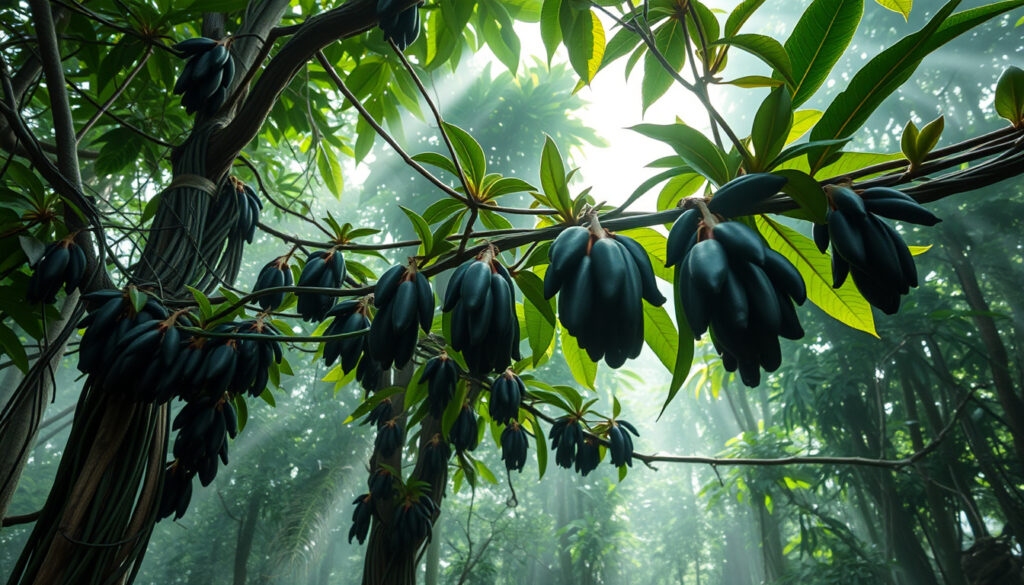
Vanilla traces its origins to Mexico, where indigenous peoples first discovered the aromatic potential of certain orchid pods thousands of years ago. The plant that produces vanilla—Vanilla planifolia—grows as a climbing vine in tropical regions, with its flavorful pods developing from delicate flowers that bloom briefly before transforming into long, green beans. Though today it appears in countless products worldwide, vanilla’s journey from Mesoamerican treasure to global commodity spans centuries of cultivation, trade, and innovation.
The earliest records of vanilla use belong to the Totonac people, who inhabited Mexico’s Gulf coast region. They considered the plant a divine gift, assigning it the name “Tlilxochitl,” meaning Black Flower in their language. Historical accounts indicate they blended vanilla with honey or cacao to create prized beverages. When Spanish conquistador Hernán Cortés arrived in the early 1500s and encountered Emperor Moctezuma II’s court, he witnessed vanilla being used in these traditional preparations. Cortés subsequently brought the pods back to Europe, where European elites initially valued them more as a perfume ingredient than as a food flavoring.
Mexico (Mesoamerica)
Vanilla orchid (Vanilla planifolia)
Madagascar (approximately 80% of supply)
Fermented pod extract
Key Insights on Vanilla Origins
- Mexico remains the birthplace of vanilla cultivation, where wild orchids naturally produced pods before commercial farming began
- The Totonac civilization established vanilla as a sacred crop centuries before European contact
- Aztec civilization adopted vanilla as a luxury ingredient, typically mixing it with cacao beverages
- Spanish traders introduced vanilla to European markets around 1520, initially marketing it as a perfume
- The plant requires specific growing conditions: humid climate, partial shade, and support structures for climbing
- Natural vanilla production relies entirely on hand-pollination in most regions outside Mexico
| Fact | Detail |
|---|---|
| Scientific Name | Vanilla planifolia |
| Native Region | Mexico and Central America |
| Indigenous Name | Tlilxochitl (Black Flower) |
| First European Contact | Early 1500s via Hernán Cortés |
| Primary Producing Countries | Madagascar, Indonesia, Mexico |
| Labor Requirement | Hand-pollinated; extremely labor-intensive |
What Plant Produces Vanilla?
Despite common misconceptions, vanilla does not come from a bean plant—it derives from the Vanilla genus of orchids, specifically Vanilla planifolia, which produces long, slender pods commonly called vanilla beans. The plant itself grows as a hemiepiphytic vine, meaning it begins life as an epiphyte perched on trees while simultaneously sending roots into the soil below. This growth pattern allows the orchid to access nutrients from both the canopy and ground, adapting to its humid tropical environment spanning regions from Mexico to Brazil.
The vanilla orchid produces delicate, waxy flowers that last only about 24 hours once opened. Each flower must be pollinated within this narrow window to develop into a usable pod. In Mexico, native orchid bees perform this task naturally, transferring pollen between flowers as they forage. This natural pollination system limited vanilla cultivation outside Mesoamerica for centuries, as the specific bee species required for pollination did not exist elsewhere.
The Vanilla Orchid’s Unique Growth Requirements
Cultivating vanilla orchids demands precise environmental conditions and significant manual intervention. The vines require temperatures between 68°F and 86°F, high humidity levels around 80%, and protection from direct sunlight while still receiving bright, indirect light. Farmers typically train the climbing vines onto support structures such as posts or trees, allowing aerial roots to anchor while soil roots gather nutrients. The plants typically begin flowering after three to four years of growth, with each mature vine capable of producing dozens of flowers during blooming season.
Vanilla belongs to the Orchidaceae family, making it a distant cousin to ornamental orchids found in gardens worldwide. Unlike many orchid species grown for their flowers, vanilla cultivation focuses entirely on the development of seed pods containing the aromatic compounds that define vanilla flavor.
Why Vanilla Isn’t Actually a Bean
The term “vanilla bean” persists colloquially but technically misrepresents the plant product. Vanilla originates from orchid seed pods, not from legume plants that produce true beans. The pods develop after successful pollination when the flower’s ovary swells and elongates into a green, fleshy structure. As the pod matures over six to nine months, it undergoes curing processes that transform its color to dark brown and develop the characteristic vanilla aroma. The tiny, dark specks visible within vanilla beans are actual seeds—confirmation that this is a true botanical pod containing reproductive structures.
Which Countries Produce the Most Vanilla Today?
Madagascar stands as the undisputed leader in global vanilla production, cultivating approximately 80% of the world’s supply of Vanilla planifolia, often referred to as Bourbon vanilla. The island nation possesses ideal growing conditions: consistent humidity, well-distributed rainfall, and red laterite soils that provide excellent drainage. Malagasy farmers have developed generations of expertise in hand-pollination techniques and curing methods that produce beans prized for their creamy, classic vanilla flavor profile. The country’s vanilla industry supports hundreds of thousands of livelihoods in rural communities, though volatile pricing has created economic instability over the years.
Indonesia has emerged as the second-largest vanilla producer, leveraging its extensive tropical land area and favorable climate across numerous islands. Indonesian vanilla tends to have a slightly different flavor profile—often described as earthier and less sweet than Madagascar’s offering—due to variations in soil composition and processing methods. Mexican vanilla, despite the country’s status as the plant’s birthplace, represents only a small fraction of global production, as domestic demand often exceeds supply and many Mexican growers focus on supplying local markets and tourist-oriented products.
Other Notable Vanilla-Producing Regions
- Comoros: Small island nation off East Africa producing high-quality vanilla with assistance from French agricultural cooperatives
- Uganda: Offers unique advantage of two annual harvests due to equatorial climate; introduced by British colonial administrators in the 1940s
- Réunion Island: Historic production site where Edmond Albius developed hand-pollination techniques; relatively small volume today
- Tahiti: Cultivates Vanilla tahitensis, a distinct species producing pods with fruity, floral notes reminiscent of cherry and almond; originated from French imports in the 19th century
- India: Emerging producer exploring vanilla cultivation in southern states, though still developing infrastructure and expertise
Geographic origin significantly influences vanilla’s flavor characteristics. Madagascar vanilla offers creamy, traditional notes, while Tahitian varieties provide fruity, floral complexity. Indonesian beans contribute earthy undertones. When selecting vanilla products, origin information can indicate expected flavor profiles, though proper curing and storage practices matter equally for quality preservation.
History and Cultivation of Vanilla
The story of vanilla’s spread beyond Mexico involves one of history’s most remarkable agricultural innovations. When vanilla vines were smuggled to Réunion Island in the Indian Ocean during 1793, cultivators faced a persistent problem: plants grew vigorously and produced abundant flowers, yet almost never developed fruit. The mystery persisted until 1841, when a 12-year-old enslaved boy named Edmond Albius developed the hand-pollination technique that would revolutionize vanilla cultivation globally.
Albius’s method proved elegantly simple yet required meticulous timing and delicate manipulation. Workers must lift the flower’s rostellum—a membrane separating male and female parts—and press the anthers directly against the stigma to transfer pollen. This artificial pollination mimics what orchid bees accomplish naturally in Mexico, and it enabled vanilla cultivation wherever suitable climates existed. Tragically, Albius received no recognition or compensation for his invention, and he died in poverty despite transforming an entire agricultural industry.
The Vanilla Curing Process
Harvested vanilla pods require extensive processing before developing their characteristic aroma and flavor. The curing process spans several months and involves multiple stages designed to break down cell walls and activate enzymatic reactions that produce vanillin—the primary compound responsible for vanilla’s signature scent. Workers typically begin by briefly immersing pods in hot water, then wrapping them in blankets to “sweat” at elevated temperatures before gradually drying them in sunlight. This cycling continues for weeks until pods reach the proper moisture content, after which they mature in bundled storage to harmonize their flavors.
- Harvest: Pods are picked at peak maturity, typically six to nine months after pollination
- Killing: Hot water immersion or freeze/thaw cycles halt plant growth and begin cellular breakdown
- Sweating: Pods are bundled and stored in insulated containers to elevate temperature and humidity
- Drying: Sun exposure alternates with shade rest to reduce moisture while preserving aroma compounds
- Conditioning: Dried pods rest in closed boxes for weeks to months, allowing flavors to fully develop and mellow
- Grading: Final inspection and sorting by quality, moisture content, and bean length
The labor-intensive nature of vanilla cultivation contributes substantially to its high market price. Each flower requires individual hand-pollination, and each pod demands careful monitoring throughout the curing process. At peak market prices, vanilla beans have sold for hundreds of dollars per kilogram, making them among the most valuable agricultural commodities by weight. This pricing reflects not scarcity alone but the genuine difficulty of producing high-quality vanilla without shortcuts that compromise flavor development.
What Distinguishes Natural from Synthetic Vanilla?
The vast majority of vanilla-flavored products worldwide contain synthetic vanillin rather than natural vanilla extract. Industry estimates suggest synthetic versions account for approximately 99% of all vanilla-flavored food and beverage applications, primarily because natural vanilla remains scarce and expensive. Manufacturers produce synthetic vanillin through industrial processes using raw materials such as wood pulp, petrochemical derivatives, or lignin—a compound extracted from plant cell walls. These lab-created versions provide the characteristic vanilla taste at a fraction of natural product costs.
Authentic vanilla extract made from genuine vanilla pods represents less than 1% of global vanilla-flavor consumption. Reading ingredient labels carefully helps consumers distinguish products containing natural vanilla from those using artificial alternatives. The price difference between natural and synthetic vanilla remains substantial, and this economic reality drives market preferences toward manufactured versions.
Flavor Composition Differences
Natural vanilla contains vanillin—the primary flavor compound—as well as over 200 additional organic compounds that create its complex, nuanced profile. These companion compounds vary depending on vanilla origin, curing methods, and pod maturity, resulting in distinctive taste characteristics that synthetic versions cannot replicate. Tahitian vanilla, for instance, contains compounds giving cherry and almond notes absent from standard Vanilla planifolia extracts. Synthetic vanillin delivers the basic vanilla taste but lacks the aromatic depth and subtle variations that distinguish premium natural products.
Established Facts and Remaining Questions
Researchers and historians have established considerable knowledge about vanilla’s origins, cultivation, and global trade patterns, yet certain aspects remain incompletely understood or subject to ongoing investigation. The Totonac people of Mexico, who first cultivated vanilla, have a rich history tied to this prized spice, and you can learn more about the Orígens de la vainilla a Mèxic.
| Established Information | Areas of Uncertainty |
|---|---|
| Vanilla originated in Mexico and was first cultivated by Totonac peoples | Exact timeline of domestication before European contact remains debated among historians |
| Edmond Albius invented hand-pollination in 1841 on Réunion Island | Precise origins of original vines smuggled from Mexico in 1793 |
| Madagascar produces approximately 80% of global vanilla supply | 2024 production figures vary across sources; verified statistics limited |
| Synthetic vanillin dominates approximately 99% of market applications | Long-term sustainability of wild-harvested vanilla sources |
The Cultural and Culinary Significance of Vanilla
Beyond its economic importance, vanilla holds deep cultural resonance in its regions of origin. For the Totonac people of Mexico, vanilla represented not merely a flavoring but a sacred element woven into religious ceremonies and traditional medicine. The Aztecs associated vanilla with Quetzalcoatl—the feathered serpent deity credited with bringing agricultural knowledge to humanity. This mythological connection elevated vanilla beyond ordinary status, making it appropriate for elite consumption and tribute offerings.
Modern culinary applications span from simple home baking to haute cuisine presentations. Vanilla’s versatility allows it to complement chocolate, caramel, fruits, and countless other ingredients without overwhelming them—a characteristic that explains its enduring popularity across diverse cuisines. Ice cream remains the most iconic vanilla application globally, though the spice appears equally at home in perfumes, aromatherapy products, and traditional remedies in producing regions. The Greek Pasta Salad Recipe – Easy Make-Ahead Summer Dish demonstrates how vanilla can unexpectedly enhance savory dishes, while Best Arroz con Pollo Cubano Near Me – Authentic Miami Spots and Recipe shows vanilla’s presence in Caribbean cooking traditions.
What Do Experts Say About Vanilla?
“The vanilla orchid presents one of agriculture’s most fascinating puzzles—requiring human intervention to replicate what bees accomplish naturally in Mexico, yet yielding a product of unmatched complexity.”
— UC Davis Conservatory, Tropical Plant Collections
“Vanilla’s journey from divine Mesoamerican treasure to global commodity required not just transportation but genuine innovation in cultivation techniques, demonstrating how human ingenuity can unlock agricultural potential.”
— New York Botanical Garden, Plant Talk Blog
Agricultural researchers continue studying vanilla cultivation practices, particularly concerning climate change impacts on traditional growing regions. Scientists at botanical conservatories and agricultural universities investigate mycorrhizal fungi relationships that aid vanilla seed germination—relationships that may improve cultivation success rates. The Best Arroz con Pollo Cubano Near Me – Authentic Miami Spots and Recipe article explores how these culinary traditions connect to vanilla’s broader cultural heritage.
Understanding Vanilla’s Place in Global Agriculture
Vanilla occupies a unique position among agricultural commodities, combining elements of luxury product, agricultural necessity, and cultural heritage. Unlike most major crops dominated by industrial-scale operations, vanilla production remains remarkably labor-intensive, with millions of individual hand-pollination events required for each harvest. This manual dependence creates vulnerability to labor shortages and price volatility, yet it also sustains rural communities in developing nations with employment that cannot easily be mechanized.
Climate considerations increasingly influence vanilla production geography. Traditional growing regions face challenges from changing rainfall patterns, temperature fluctuations, and extreme weather events that affect pod development and curing success. Producers in Madagascar and other countries invest in sustainable practices and diversification strategies to maintain quality and supply consistency. The interplay between natural vanilla’s complexity and synthetic alternatives’ prevalence suggests a market likely to continue bifurcating—premium natural products serving discerning consumers while manufactured versions supply mass-market applications.
Summary
Vanilla traces its origins to Mexico, where indigenous Totonac peoples first cultivated the Vanilla planifolia orchid thousands of years ago. The plant’s journey from Mesoamerican treasure to global commodity required centuries of agricultural innovation, culminating in Edmond Albius’s hand-pollination technique that enabled commercial production beyond Mexico’s borders. Today, Madagascar dominates global supply, producing approximately 80% of the world’s vanilla, while synthetic alternatives supply the vast majority of vanilla-flavored products. Understanding vanilla’s origins helps consumers appreciate both the labor involved in natural production and the remarkable human story behind every vanilla bean. The Greek Pasta Salad Recipe – Easy Make-Ahead Summer Dish offers one example of incorporating vanilla into everyday cooking, demonstrating how this historic spice continues enriching culinary traditions worldwide.
Frequently Asked Questions
Why is vanilla so expensive compared to other spices?
Vanilla requires hand-pollination for most cultivated vines, months of careful curing, and specific growing conditions that limit production areas. Each flower must be pollinated individually, and pods take six to nine months to mature before processing begins.
Does vanilla come from a bean or a pod?
Vanilla comes from orchid seed pods, not true beans. The term “vanilla bean” is colloquial—the botanical product is technically a pod containing seeds, similar to how orchid seed pods function in nature.
Which countries produce natural vanilla?
The primary natural vanilla producers include Madagascar, Indonesia, Mexico, Comoros, Uganda, Réunion, Tahiti, and India. Madagascar leads with approximately 80% of global production, while Tahiti produces a distinct species with unique flavor characteristics.
What is the difference between natural and synthetic vanilla?
Natural vanilla extract contains vanillin plus hundreds of additional compounds from cured pods, creating complex flavor. Synthetic vanillin provides basic vanilla taste from lab-manufactured sources at significantly lower cost, accounting for roughly 99% of vanilla-flavored products.
How long does vanilla take to grow and harvest?
Vanilla vines require three to four years to mature before flowering. After hand-pollination, pods develop for six to nine months before harvest, followed by several additional months of curing and conditioning to develop proper flavor.
Who invented vanilla hand-pollination?
Edmond Albius, a 12-year-old enslaved boy on Réunion Island, invented the hand-pollination technique in 1841. His simple yet effective method—lifting the rostellum to transfer pollen—enabled commercial vanilla production globally.
Is vanilla originally from Mexico?
Yes, vanilla originates from Mexico and Central America. The Totonac people first cultivated Vanilla planifolia, and the Aztecs adopted vanilla as a prized ingredient, typically combining it with cacao in traditional beverages.
More related posts
 Lee Dong-wook – Age, Height, Dramas and Military Service
 F1 (Film) Showtimes Ireland: Dublin Cinemas & Tickets
 Laura Clery: Recovery, Divorce, and Social Media Fame
 Insurance Council of BC: Licensing & Licensee Search
 Do a Barrel Roll 20 Times: How to Spin Google Page and More
 Cast of The Odyssey 2026: Who Plays Who in Nolan’s Epic
 The Curse of Oak Island: Season 13 Update & Alex Lagina Injury
