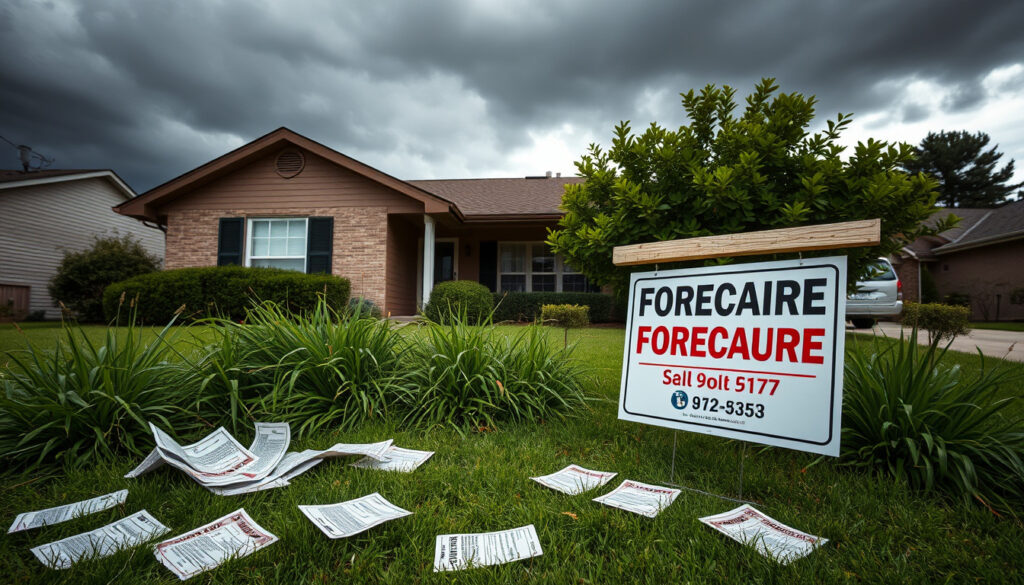
Fauquier-Strickland Financial Crisis Hits Homebuyer
A first-time homebuyer from Guelph, Ontario, made one of the biggest financial decisions of her life on July 17, 2025 — the same week Fauquier-Strickland, a municipality of roughly 500 residents in the province’s north, announced it was running out of money. The township had accumulated a $2.5 million deficit and was weighing whether to shut down nearly every service or impose property tax increases of up to 230%. Yet amid the crisis, she finalized her purchase, telling reporters she “actually cried” upon entering the market.
Provincial funding offered: $300K · Key crisis announcement: July 2025 · Example home affordability benchmark: $400,000 house · Town status: Potential end to most services
Quick snapshot
- Town facing $2.5 million deficit with zero reserves (Global News)
- Council passed service suspension resolution June 30, 2025 (Global News)
- Province offered $300,000 funding on July 29, 2025 (Global News)
- Exact causes of debt under provincial investigation (Global News)
- Whether township will merge with neighboring municipality (Velo Mortgage)
- Long-term recovery timeline for property values (Velo Mortgage)
- June 30, 2025: Service suspension resolution passed (Global News)
- July 10, 2025: Minister prohibited service halt via letter (Global News)
- July 29, 2025: $300K provincial funding proposed (Global News)
- Council must accept funding conditions by mid-August 2025 (Global News)
- Province investigating debt causes via financial investigators (Global News)
- 2025 tax bills to mail within 21 days of bylaw passage (CTV News)
| Detail | Value |
|---|---|
| Location | Northern Ontario (northwest of Timmins) |
| Population | ~500 residents |
| Total debt accumulated | $2.5 million |
| 2024 tax increase | 26% |
| 2025 tax increase approved | 20% |
| Alternative tax hike considered | 190–230% |
| Provincial aid offered | $300,000 |
| Service suspension date (cancelled) | August 1, 2025 |
Is now a bad time to buy a house in Ontario?
Buying a home in Ontario in 2025 requires navigating a province where market conditions vary dramatically by region. Urban centres like Toronto and Ottawa face affordability pressures that push buyers outward, while smaller northern communities present a different set of risks and opportunities. The Fauquier-Strickland story illustrates how a single municipality’s fiscal collapse can reshape the calculus for first-time buyers considering off-the-beaten-path purchases.
Northern Ontario specifics
Northern Ontario markets have historically offered lower entry prices than southern urban areas. A $400,000 house in this region might purchase a detached home with substantial land, something impossible in the Greater Toronto Area. However, these affordability gains come with trade-offs: thinner job markets, limited healthcare access, and — as Fauquier-Strickland demonstrated — municipalities with fragile financial foundations.
Associate Minister Graydon Smith described the township’s situation as “very concerning,” urging officials to take a hard look at future finances. His statement came during the week of July 14, 2025, when the province was arranging talks with council over the crisis. The provincial perspective suggests that northern Ontario municipalities face structural challenges that buyers must factor into their decisions.
First-time buyers in northern Ontario should verify municipal financial health before purchasing. A 20% property tax increase, as Fauquier-Strickland approved, adds hundreds of dollars annually to ownership costs.
Fauquier-Strickland context
For the Guelph woman who finalized her purchase in mid-July 2025, timing was everything — and nothing. She entered the market while her potential neighbours faced potential service disruptions, then watched as the province stepped in with $300,000 in temporary funding. Her emotional reaction, telling reporters she “actually cried” upon entering the market, underscores the complicated feelings many first-time buyers experience when balancing dream homeownership against community uncertainty.
The township’s fiscal crisis developed over years. In 2024 alone, property taxes jumped 26% to address growing deficits. The 2025 budget added another 20% increase, reduced from an 80% proposed hike, to address over $2 million in debt. For a buyer calculating monthly carrying costs, these increases matter: a $300,000 mortgage at 5% over 25 years costs roughly $1,750 monthly, but a 20% tax spike adds $600–$1,200 annually depending on assessment.
Is Ontario in a housing crisis?
Ontario’s housing landscape in 2025 presents stark contrasts. Provincial governments have implemented various policy interventions aimed at cooling overheated urban markets and supporting rural development. Yet these efforts coexist with municipal financial emergencies like the one Fauquier-Strickland faced, where the question wasn’t whether prices were too high but whether basic services could continue operating.
Affordability challenges
The Canada Mortgage and Housing Corporation has long tracked affordability metrics across provinces. In Ontario, the 30% rent-to-income rule serves as a benchmark: households spending more than 30% of gross income on housing are considered cost-burdened. For homeownership, similar calculations apply — mortgage principal, interest, taxes, and insurance (PITI) should stay below that threshold for financial stability.
To afford a $400,000 home in Ontario under conventional lending terms, buyers typically need a household income of $85,000–$100,000 with a 20% down payment ($80,000). Without that down payment, mortgage insurance adds to costs, pushing required income higher. In northern Ontario, where incomes average lower than urban centres, this income-to-home-price ratio creates genuine barriers for first-time buyers.
Small town examples
Fauquier-Strickland represents an extreme case within Ontario’s small-town housing ecosystem. The township’s crisis — rooted in accumulated deficits, depleted reserves, and a shrinking tax base — highlights vulnerabilities that other northern municipalities share to lesser degrees. The Highway 11 corridor, which includes multiple small communities between Thunder Bay and the Quebec border, faces similar structural challenges: aging populations, outmigration of young families, and reliance on resource-sector employment that fluctuates with commodity prices.
What makes Fauquier-Strickland distinctive is how quickly its fiscal situation deteriorated. The township operated with zero cash reserves for over a year, relying on credit to fund basic operations — a situation Mayor Madeleine Tremblay had reportedly sought provincial help to address for years before the crisis peaked. This financial precarity translated directly into uncertainty for residents and potential homebuyers.
Buying in a financially distressed municipality can mean rock-bottom purchase prices today and significant carrying costs tomorrow through tax increases and service fees needed to restore fiscal health.
What is the population of Fauquier Strickland?
Fauquier-Strickland is one of Ontario’s smallest municipalities, with approximately 500 residents distributed across a geographic area northwest of Timmins. This population size places it among the least populated municipalities in the province, comparable to other northern townships like case studies often cited in Ontario housing discussions.
Comparison to least populated towns
Ontario’s smallest municipalities share common characteristics: aging demographics, limited commercial tax bases, and services stretched across wide geographic areas. With 500 residents, Fauquier-Strickland has roughly the population of a large apartment building in Toronto. Yet unlike that apartment building’s residents, who can walk to transit and shops, Fauquier-Strickland’s residents depend on personal vehicles, drive considerable distances for healthcare, and rely on their municipality for services ranging from road maintenance to fire protection.
This scale creates fundamental service-delivery challenges. A municipal staff of perhaps five to ten people handles everything from bylaw enforcement to financial administration. When fiscal crisis strikes, there’s little room to absorb shocks. The township’s $2.5 million debt equates to roughly $5,000 per resident — an extraordinary burden for a community where median household incomes likely fall below provincial averages.
Implications for services
The services threatened at Fauquier-Strickland included garbage collection, road maintenance, snow removal, and fire services — core municipal functions that urban residents take for granted. The proposed alternative to service suspension, a 190–230% property tax increase, would have tripled most tax bills and “potentially forced families from their homes,” according to township council. This stark choice illustrates how municipal financial failure creates cascading risks for residents across the economic spectrum.
The province’s $300,000 funding offer came with conditions: cancelling layoffs, freezing discretionary spending, passing a budget, and collecting taxes. These requirements aimed to stabilize operations temporarily while longer-term solutions — including potential merger with a neighbouring township or managed receivership — were explored.
How much do you need to make to afford a $400,000 house in Ontario?
Affordability calculations for a $400,000 home purchase depend on down payment size, interest rates, local property taxes, and household income. While the specific numbers vary by lender and individual circumstances, general benchmarks help first-time buyers understand their position in Ontario’s 2025 market.
Income requirements
With a 20% down payment ($80,000) on a $400,000 home, a buyer faces a $320,000 mortgage. At a 5% interest rate over 25 years, monthly principal and interest payments total approximately $1,860. Adding property taxes ($3,600 annually or $300 monthly assuming a 0.9% rate), home insurance ($1,800 annually or $150 monthly), and basic maintenance reserves ($3,000 annually or $250 monthly) brings total monthly housing costs to roughly $2,560.
Lenders typically use the “stress test” qualifying rate, currently around 7%, which would require demonstrating ability to service a mortgage at that higher rate. This means buyers need sufficient income to cover payments at both the actual contract rate and the qualifying rate. For a $2,560 monthly housing cost with property taxes and insurance factored, lenders might require a gross household income of $75,000–$85,000 minimum.
Crisis-affected areas
In municipalities like Fauquier-Strickland facing financial distress, buyers face additional cost considerations. The approved 20% tax increase means annual property taxes could reach $4,200–$5,500 for a property previously assessed at $400,000, depending on the assessment classification. This adds $50–$165 monthly beyond typical northern Ontario rates, pushing total housing costs higher.
Northern Ontario buyers also contend with heating costs significantly exceeding urban southern Ontario levels. A home heated by oil, propane, or electric baseboards in a cold climate can see utility bills $200–$400 monthly higher than a comparable Toronto-area home, effectively reducing the income available for mortgage qualification. These regional variations make affordability calculations developed for urban markets potentially misleading when applied to northern contexts.
Northern Ontario offers lower home prices but higher per-household municipal costs when crises like Fauquier-Strickland’s occur. Buyers must factor in both purchase price and potential tax volatility.
What is the 30% rent rule in Canada?
The 30% rule in Canadian housing finance represents a guideline for housing affordability, applied to both renters and buyers. Originating from U.S. housing policy but widely cited in Canadian discussions, it suggests households should allocate no more than 30% of gross monthly income to housing costs. Exceeding this threshold indicates cost-burdened status, associated with financial stress and reduced ability to save or handle unexpected expenses.
Relevance to homebuying
For homebuyers, the 30% rule applies to the full PITI calculation: principal, interest, taxes, and insurance. A household earning $90,000 gross annually ($7,500 monthly) should target maximum housing costs of $2,250 monthly. Using the $2,560 monthly estimate for a $400,000 home, this household would exceed the 30% threshold by approximately $310 — meaning the home would be considered unaffordable under that standard.
This calculation illustrates why affordability remains challenging across Ontario in 2025. Even with the lower purchase prices available in northern markets, incomes must keep pace with housing costs for the 30% rule to hold. In communities like Fauquier-Strickland, where median household incomes likely fall below the provincial average, the rule’s threshold becomes even more difficult to achieve.
Alternatives in crisis towns
For residents facing housing cost burdens in financially distressed municipalities, several strategies exist. Contacting mortgage lenders to request tax reassessments, payment deferrals, or loan restructuring can provide temporary relief, according to advice from financial analysts covering the Fauquier-Strickland situation. Some homeowners might consider selling, but experts caution against panic-selling during municipal disruptions, noting that property values may stabilize once crisis conditions resolve.
Renting versus buying analysis becomes particularly important in crisis municipalities. A buyer committing to a mortgage faces fixed costs regardless of municipal fiscal health, while a renter might have more flexibility to relocate if services deteriorate or taxes spike. However, renting in small northern communities often means limited inventory and potentially unstable tenancy situations with landlords facing their own tax pressures.
Upsides
- Extremely low purchase prices compared to urban Ontario markets
- Provincial intervention ($300K funding) may stabilize services short-term
- Remote northern living appeals to remote workers and downsizers
- Community ties and lifestyle factors beyond financial metrics
Downsides
- Property tax volatility — 20–80% increases possible
- Service disruption risk if future fiscal crises emerge
- Property values may decline or stagnate during municipal instability
- Limited resale market; exit options constrained
- Potential merger or absorption by neighbouring municipality
Timeline of Fauquier-Strickland’s crisis
Three distinct phases mark Fauquier-Strickland’s path from fiscal stress to near-collapse to provisional stabilization: accumulation of debt, crisis declaration, and provincial intervention.
| Date | Event |
|---|---|
| 2024 | Property taxes increased by 26% to address growing deficits |
| June 30, 2025 | Council passed resolution to suspend services, lay off all staff August 1 |
| July 10, 2025 | Minister Rob Flack sent letter prohibiting service suspension |
| July 14, 2025 | Province arranged meeting with council to discuss funding terms |
| July 17, 2025 | First-time homebuyer from Guelph finalized purchase amid crisis coverage |
| July 29, 2025 | Province offered $300,000 conditional funding for essential services |
| Post-July 2025 | Council approved budget with 20% tax increase; tax bills to mail within 21 days |
The timeline reveals how rapidly municipal fiscal situations can escalate. A 26% tax increase in 2024 proved insufficient; within months, council faced the choice between complete service suspension or 190–230% tax hikes. The provincial response came quickly once media attention intensified, but financial investigators are still determining exactly how the township accumulated $2.5 million in deficits.
Voices from the crisis
“The only alternative would have been to implement a property tax increase of 190 to 230 per cent on residents, which would have tripled most tax bills and potentially forced families from their homes.”
— Township Council (as reported by Global News)
“It’s a very concerning situation and that it’s time for the township to take a long hard look at what the future looks like and what it needs to do to get the financial house back in order.”
— Graydon Smith, Associate Minister of Municipal Affairs and Housing (Ontario government statement)
Smith also emphasized that the funding injection aimed to give the township breathing room while requiring it to address underlying fiscal problems. Analysts noted the province’s approach signals a willingness to prop up essential services temporarily without guaranteeing long-term municipal survival.
Related reading: House for Sale St John’s – Listings Prices Neighborhoods Guide · 5 Year Canada Bond Yield – Current Rate, History & Forecast
The homebuyer’s ordeal mirrors wider Canadian struggles, as Vancouvers viral condo crisis videos fuel outrage over skyrocketing property prices in Vancouver.
Frequently asked questions
What caused Fauquier-Strickland’s financial crisis?
The township accumulated $2.5 million in operating deficits and depleted all reserve funds over multiple years. Causes reportedly include mismanagement, inflated spending, and a shrinking tax base as residents left the community. The province is investigating the specific causes through financial investigators.
Will Fauquier-Strickland end most services?
The planned August 1, 2025 service suspension was prohibited by a letter from Ontario’s Minister of Municipal Affairs and Housing on July 10, 2025. The province subsequently offered $300,000 in conditional funding. However, long-term service viability remains uncertain pending council acceptance of conditions and provincial investigation outcomes.
Who is the homebuyer featured in the crisis story?
A first-time homebuyer originally from Guelph, Ontario, finalized her purchase in Fauquier-Strickland on July 17, 2025. She told reporters she “actually cried” upon entering the market. Her purchase came during the period when CBC and other outlets were reporting on the township’s fiscal crisis.
What funding has Ontario offered Fauquier-Strickland?
The province offered $300,000 in one-time funding, distributed in monthly installments, for essential services. Conditions include cancelling planned layoffs, freezing discretionary spending, passing a budget, and collecting taxes. The funding is intended to provide temporary relief while longer-term solutions are developed.
Should you buy a house in a town like Fauquier-Strickland now?
Buying in financially distressed municipalities offers lower purchase prices but carries risks: property tax volatility, service disruptions, and uncertain property values. Buyers should verify municipal financial health, understand potential tax increases (Fauquier-Strickland approved a 20% hike), and accept that exit options may be limited if conditions deteriorate.
How does the crisis affect real estate in Fauquier-Strickland?
Property values face downward pressure from the crisis, potentially creating buying opportunities for risk-tolerant purchasers. However, the 2025 tax increase adds carrying costs, and future tax hikes remain possible if the township cannot achieve fiscal balance. The resale market in such communities tends to be thin, limiting liquidity.
What are the risks for homebuyers in financial crisis towns?
Primary risks include: property tax increases of 20–80% or more; service reductions or disruptions; property value declines; difficulty obtaining financing or refinancing; potential municipal merger or dissolution requiring residents to relocate. Buyers should conduct thorough due diligence and potentially consult financial advisors before purchasing in distressed municipalities.
More related posts
 Toddler Shoe Size Chart: Complete Guide to Fitting & Sizing
 Mohamed Hadid: Wealth, Career, Family, and Net Worth
 Amy Madigan: Biography, Age, Husband, and Most Famous Role
 Tournoi Indian Wells 2025 – Dates, Schedule, Players, Tickets
 John Candy’s Cause of Death, Family, and Lasting Legacy
 How Old is Martha Stewart? Age, Net Worth, Family 2025
 Michel Bergeron: Quebec Nordiques Coach Biography
 Morse & Son Obituaries in Niagara Falls: Recent Death Notices
