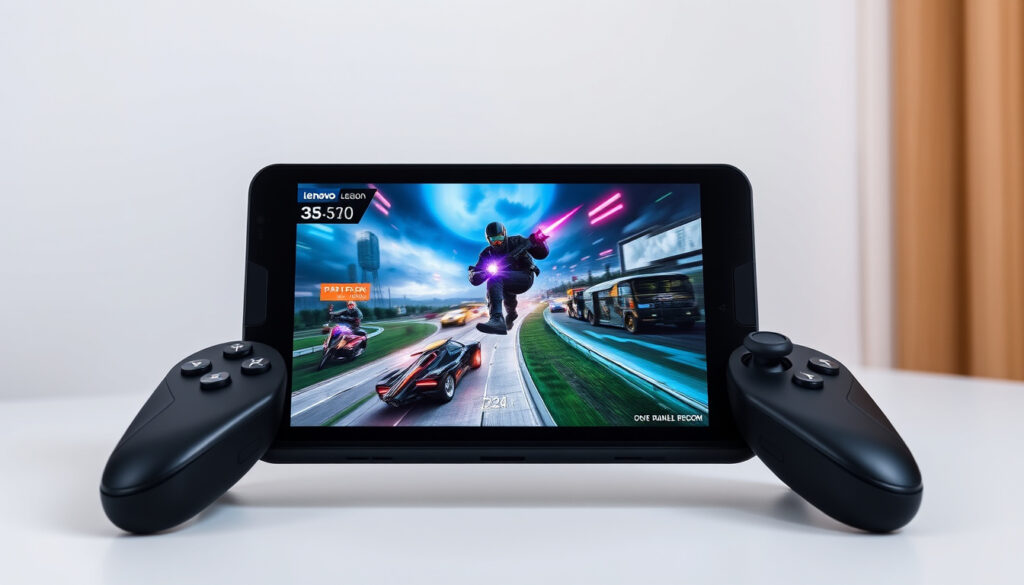
Lenovo Legion Go 2: Price, Specs, Worth It & Availability
If you’ve been eyeing the Lenovo Legion Go 2 for handheld gaming, you’re probably noticing something frustrating: the thing keeps selling out. The device dropped in late 2025 carrying a flagship AMD processor and a 144Hz OLED display, but finding one in stock—especially in Ireland—has been trickier than the specs suggest it should be. The good news is that it’s officially available. The catch? Prices are firm, and there’s a SteamOS version coming in 2026 that might make early buyers feel premature.
Display: 8.8-inch 144Hz · Processor: AMD Ryzen Z2 Extreme · RAM: 32GB · Storage: 512GB SSD · Controllers: Detachable Legion Truestrike
Quick snapshot
- Powered by up to AMD Ryzen Z2 Extreme (Lenovo Ireland official specs)
- 8.8-inch 144Hz display (Lenovo Ireland product page)
- Detachable controllers (Lenovo Ireland product page)
- Exact release date for SteamOS variant in Europe
- Whether additional Ireland retailers will get stock
- Battery life performance in real-world testing
- Prototype shown at CES 2025 (PC Guide prototype coverage)
- Windows model launched October 2025 (GamingOnLinux launch report)
- SteamOS version reportedly due June 2026 (Windows Central SteamOS coverage)
- SteamOS variant may justify waiting for Linux gamers
- More retail availability expected through early 2026
- Prices unlikely to drop significantly before SteamOS launch
The table below consolidates the key confirmed specifications from Lenovo’s official sources and verified tech reporting.
| Specification | Value |
|---|---|
| Processor | AMD Ryzen Z2 Extreme (Zen 5) |
| Display | 8.8-inch Full HD+ 144Hz |
| RAM/Storage | 32GB/512GB |
| Availability | Listed on official sites and retailers |
| Variants | Legion Go S mentioned in discussions |
Is the Lenovo Legion Go 2 worth it?
On pure specifications, the Legion Go 2 justifies its price tag for serious handheld gaming enthusiasts. The AMD Ryzen Z2 Extreme processor brings 8 cores and 16 threads of processing power, while the 8.8-inch 144Hz OLED display delivers smooth visuals that the original Legion Go’s IPS panel couldn’t match. The 74Whr battery represents a 50% increase over the original’s 49.2Whr cell, which should translate to meaningfully longer play sessions.
Pros and performance
The performance ceiling is genuinely impressive for a handheld device. AMD’s RDNA 3.5 Radeon 890M graphics handle modern titles at reasonable settings, and 32GB of LPDDR5X RAM means no memory bottlenecks when multitasking between games and applications. The detachable Legion Truestrike controllers give flexibility for different play scenarios, and the 920g weight—while heavier than some competitors—keeps it manageable for portable use.
For gamers prioritising raw performance over portability, the Legion Go 2 delivers desktop-class specs in a handheld form factor. The AMD Ryzen Z2 Extreme handles titles that would struggle on competitors like the Steam Deck OLED.
Value vs competitors
The comparison with the ASUS ROG Ally X and MSI Claw 8 AI+ becomes a question of ecosystem preference. The Legion Go 2 at €989.99 for the base 32GB model undercuts the ROG Ally X on price while matching or exceeding its specifications. However, buyers already invested in Valve’s ecosystem might find the SteamOS variant worth waiting for, especially given the June 2026 timeline for that release.
The implication: early adopters get flagship hardware now, but those willing to wait for SteamOS may find a cleaner Linux experience worth the delay.
Why is Legion Go 2 so expensive?
The $1,099 starting price reflects component costs that are difficult to reduce. AMD’s Ryzen Z2 Extreme sits at the top of the handheld processor hierarchy, and OLED panels at this resolution and refresh rate remain costly to manufacture. Lenovo’s decision to include 32GB of LPDDR5X RAM across higher-tier configurations further drives up the bill of materials.
Component costs
The Zen 5 CPU architecture delivers up to 8 cores and 16 threads, a specification that desktop PCs were shipping just a few years ago. The 144Hz OLED display alone represents a significant portion of the device’s manufacturing cost, as high-refresh organic panels require precision manufacturing that hasn’t fully scaled to meet gaming handheld demand.
The Legion Go 2’s price reflects genuine hardware investment. Buyers paying €989.99 or more receive components that would cost significantly more assembled as a desktop gaming PC, but the trade-off is upgradeability—you’re locked into Lenovo’s ecosystem.
Flagship features
The 74Whr battery alone justifies part of the premium, representing a substantial jump from the original Legion Go. The 2TB maximum SSD option, detachable controllers, and 144Hz display rounded out the feature set that Lenovo positioned as worthy of flagship pricing.
The catch: premium components command premium prices, and this device targets enthusiasts willing to pay for the best handheld gaming experience available.
Why is Legion Go 2 sold out?
Lenovo cancelled some pre-orders in September 2025, citing high demand as the official reason. The initial ship date of September 16, 2025 was delayed over a month, with Lenovo issuing an apology on September 17, 2025 to affected customers. The company prioritized getting units to retail channels rather than fulfilling direct pre-orders, leaving some early buyers without the handheld they ordered.
Launch demand
Multiple factors contributed to the demand surge. The original Legion Go had built a loyal following after its October 2023 launch, and the spec jump to the Ryzen Z2 Extreme attracted both upgrades and new buyers from competing platforms. Combined with limited initial manufacturing runs, demand simply outpaced supply.
Regional availability
In Ireland, availability varies by retailer. Harvey Norman lists the 32GB 512GB model at €1,079, while Very.ie offers the 32GB 1TB configuration at €1,379.99. Klarna shows the lowest current price at €989.99 for the base 512GB model. Stock appears to refresh periodically, so checking multiple retailers increases the chance of finding availability.
Lenovo’s pattern with the original Legion Go suggests retail availability will improve over time. Buyers who missed launch-window stock should see more consistent availability through early 2026, though prices are unlikely to decrease significantly before the SteamOS variant arrives.
The pattern: high demand combined with limited manufacturing creates scarcity, a familiar pattern for flagship gaming hardware launches.
Did Lenovo cancel the Legion Go 2?
The Legion Go 2 is not cancelled. Official Lenovo product pages for both Ireland and the US remain active, listing the device with full specifications and current pricing. The Windows version launched successfully in October 2025, and the SteamOS variant is positioned for a June 2026 release rather than cancellation.
Rumors vs reality
Confusion likely stems from the pre-order cancellations, where Lenovo chose to prioritise retail distribution over direct-to-consumer pre-orders. This created a perception of supply problems deeper than they actually were. The device remained in active production and continued shipping to retailers throughout the period when pre-orders were being cancelled.
Current status
Lenovo’s Ireland page confirms the Legion Go Gen 2 with up to AMD Ryzen Z2 Extreme processors, and the US site lists the full specification sheet. Both regions have the device listed as available, though stock fluctuates between retailers. There is no indication from official Lenovo channels that the product has been discontinued or that a successor is imminent.
What this means: the product remains active and in production, with official channels maintaining current listings and pricing.
What is better, Rog or Legion?
The answer depends on your ecosystem priorities and whether you value the SteamOS option. Both devices offer similar specifications at comparable price points, but they serve slightly different user profiles. The Legion Go 2’s detachable controllers and larger battery give it advantages for extended gaming sessions, while the ROG Ally X might appeal to users already familiar with ASUS’s gaming ecosystem.
Performance comparison
On raw performance, the Ryzen Z2 Extreme in the Legion Go 2 matches or slightly exceeds the ROG Ally X’s processing capabilities. The 74Whr battery in the Legion Go 2 provides approximately 50% more capacity than typical competitors, which translates to tangible runtime improvements for demanding titles. Graphics performance through AMD Radeon 890M delivers comparable results across both platforms.
Design differences
The Legion Go 2’s design philosophy prioritizes flexibility with detachable controllers, while the ROG Ally X integrates its controls more permanently. The Legion Go 2’s 920g weight makes it one of the heavier handhelds, which users notice during extended play sessions. The trade-off comes with the larger battery and more robust cooling that the extra weight enables.
The comparison table below highlights the key differences between these handheld gaming platforms.
| Feature | Legion Go 2 | ROG Ally X | Steam Deck OLED |
|---|---|---|---|
| Processor | AMD Ryzen Z2 Extreme | AMD Ryzen Z1 Extreme | AMD APU |
| Display | 8.8″ 144Hz OLED | 7″ 120Hz LCD | 7.4″ 90Hz OLED |
| Battery | 74Whr | 40Whr | 50Whr |
| RAM | Up to 32GB | 24GB | 16GB |
| Weight | 920g | 678g | 640g |
| Starting Price | €989.99 (IE) | ~$799 | $649 |
Legion Go S context
The Legion Go S represents Lenovo’s mid-tier option positioned between the original Legion Go and the full Legion Go 2. Some Reddit users have noted that the Legion Go S offers adequate performance at a lower price point, making it a pragmatic choice for buyers who don’t need the maximum specifications of the flagship model. This creates a three-tier lineup where the Go S serves budget-conscious buyers while the Go 2 targets enthusiasts.
The implication: the Legion Go 2 wins on raw specs but the Go S fills a gap for cost-conscious buyers who still want Legion branding.
Upsides
- Top-tier AMD Ryzen Z2 Extreme processor for demanding games
- 8.8-inch 144Hz OLED display with smooth, vibrant visuals
- 74Whr battery exceeds competitors by roughly 50%
- Detachable controllers add play flexibility
- 32GB RAM handles multitasking and future-proofing
- Available now with official Lenovo support
Downsides
- Pricier than many alternatives at €989.99-€1,379.99
- Heavier than competitors at 920g
- Pre-order cancellations created trust issues
- SteamOS version arriving mid-2026 may make early buyers regret timing
- Lower resolution (1920×1200) than original Legion Go (2560×1600)
- Limited stock requiring multiple retailer checks
Reddit users who have compared the Legion Go 2 against the Legion Go S note that the performance difference is real but not dramatic for most games. If budget is a concern, the Go S delivers serviceable performance at a lower entry point. If maximum specifications matter for your gaming library, the Go 2 justifies its premium.
“The new Lenovo Legion Go 2 has a starting price of $1,100 and can be specked up to an almost absurd $1,480.” — YouTube Reviewer
“Lenovo cancels Legion Go 2 pre-orders, quoting high demand despite gaming handheld’s steep price.” — NotebookCheck tech news coverage
NotebookCheck reported that Lenovo cancelled Legion Go 2 pre-orders, citing high demand despite the gaming handheld’s steep price. The company’s decision to prioritise retail channels over direct orders left some early adopters waiting longer while inventory reached storefronts.
Related reading: Windows 10 End of Life · What Is Cloud Computing
klarna.com, youtube.com, youtube.com, notebookcheck.net, lenovo.com, harveynorman.ie, lenovo.com
The Lenovo Legion Go 2 packs an AMD Ryzen Z2 Extreme chip into its 8.8-inch 144Hz chassis, where detailed specs and comparisons break down pricing against ROG Ally rivals.
Frequently asked questions
What are the specs of Lenovo Legion Go 2?
The Legion Go 2 features an AMD Ryzen Z2 Extreme processor with up to 8 cores and 16 threads, 32GB LPDDR5X RAM, up to 2TB SSD storage, an 8.8-inch 1920×1200 OLED display at 144Hz, and a 74Whr battery. Detachable Legion Truestrike controllers are included.
Where to buy Lenovo Legion Go 2 in Europe?
In Ireland, the device is available at Harvey Norman, Very.ie, and through Klarna’s marketplace. European availability varies by country, with Lenovo’s official sites listing regional pricing. The Windows version launched October 2025, while a SteamOS variant reportedly arrives June 2026.
What is Lenovo Legion Go 2 Z2 Extreme?
The AMD Ryzen Z2 Extreme is the flagship processor option for the Legion Go 2, featuring Zen 5 CPU architecture with 8 cores and 16 threads, paired with RDNA 3.5 Radeon 890M graphics. It represents the top configuration available for this handheld gaming PC.
Is there a Lenovo Legion Go 2 case available?
Lenovo and third-party manufacturers offer carrying cases and screen protectors designed specifically for the Legion Go 2’s dimensions of 11.64 x 5.38 x 1.66 inches. Check major retailers for official and third-party accessory options compatible with the 8.8-inch display.
What is Lenovo Legion Go S?
The Legion Go S is Lenovo’s mid-range handheld option positioned below the flagship Legion Go 2. It offers adequate gaming performance at a lower price point, making it a practical choice for buyers who want the Legion Go experience without paying flagship prices for maximum specifications.
Does Lenovo Legion Go 2 have OLED screen?
Yes. The Legion Go 2 features an 8.8-inch WUXGA (1920×1200) OLED display operating at 144Hz. This represents a shift from the original Legion Go’s IPS panel to OLED technology for improved contrast and color accuracy.
How much RAM does Lenovo Legion Go 2 have?
The Legion Go 2 supports up to 32GB of LPDDR5X RAM operating at 8000MHz. This configuration handles modern games comfortably and provides headroom for multitasking between gaming and other applications.
More related posts
 Two Lives of Jane Seymour: Queen and Actress Compared
 What Does 1111 Mean? Spiritual, Biblical & Love Meanings
 Where to Watch How to Train Your Dragon – Peacock Exclusive
 Stan Rogers Death: Plane Crash, Cause & Music Legacy
 Mira Kpop Demon Hunters – Role, Backstory And Powers
 Amazing Race Canada 2025: Winners, Schedule & Season 12 Status
 Aga Khan: Wealth, Faith, and Legacy of Ismaili Imams
 Greek Pasta Salad Recipe – Easy Make-Ahead Summer Dish
